This is the "Philosophical Inquiry" section of nursepinemedal.com.
To go to the main homepage click here.


The Peace Flag designed by Cora di Brazzà. To learn more about the flag and its symbolism, click here.
When Cora di Brazzà designed the peace flag in 1897, she was guided by one of Froebel's principles, "use the eyes." At the Cora di Brazzà Foundation, we embrace that teaching, using specific visual objects (such as the peace flag) as portals which allow the learner to "enter the forest" of "peace and justice history and philosophy," as we call it.
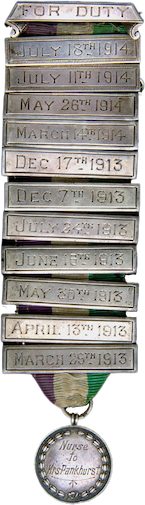
Nurse Pine's suffragette medal is just such a portal ! A formidable information delivery device, the medal can be used as a STIMULUS for Philosophical Inquiry (PI). Also known as COPI (Community of Philosophical Inquiry), PI is a structured dialogue that engages participants in the activity of 'doing philosophy.'

How to use the medal as Philosophical Stimulus for a Philosophical Inquiry (PI)?
Here's a quick guide to get you started - set aside 30 minutes for background and 1 hour for the activity. (For more a more advanced Inquiry contact the London based Philosophy Foundation here.)
STEP 1) Read the 1 page info sheet on conducting a Philosophical Inquiry (PI) here.
STEP 2) Go to the medal's image map at nursepinemedal.com and play the video at dot #12 for participants as backgrounder. When the video is done, draw attention to the image map and other informational dots (learners can explore on their own for homework)
STEP 3) Ask the question "Is it wrong to disrespect someone's Last Will and Testament," Why or Why not, after all - the person is dead. Can one harm the dead? Follow the principles of a PI and assign a scribe/concept mapper to publicly record the answers on an overhead/posterboard. This Inquiry is known as "Posthumous Harm 101". Nurse Pine's Will is mentioned in the video, and that can be used as sub-stimulus.
STEP 4) Ask the Follow up Question: "What should happen to a bequeathed object when the museum/archive to which it is bequeathed ceases to exist" (There is in fact a legal answer to this question in both U.K. and U.S. law). (Scribe/concept mapper records on separate poster/overhead). This Inquiry is known as "When Wills are "Impossible" to Respect".
STEP 5) Discuss some famous Wills (e.g., that of Alfred Nobel) which bequeath property for a public good. Ask participants about the worth of one's final intentions when aimed at the public's welfare. (Scribe/concept mapper records on separate poster/overhead). This inquiry is known as the "Aiming for Value".
*This inquiry based on sessions led by Dr. Hope Elizabeth May with her students at Central Michigan University. A handout of the 2025 session can be downloaded here.

This is the "Philosophical Inquiry" section of nursepinemedal.com.
To go to the main homepage click here.
When Cora di Brazzà designed the peace flag in 1897, she was guided by one of Froebel's principles, "use the eyes." At the Cora di Brazzà Foundation, we embrace that teaching, using specific visual objects (such as the peace flag) as portals which allow the learner to "enter the forest" of "peace and justice history and philosophy," as we call it.
Nurse Pine's suffragette medal is just such a portal ! A formidable information delivery device, the medal can be used as a STIMULUS for Philosophical Inquiry (PI). Also known as COPI (Community of Philosophical Inquiry), PI is a structured dialogue that engages participants in the activity of 'doing philosophy.'
The Peace Flag designed by Cora di Brazzà. To learn more about the flag and its symbolism, click here.
How to use the medal as Philosophical Stimulus for a Philosophical Inquiry (PI)?
Here's a quick guide to get you started - set aside 30 minutes for background and 1 hour for the activity. (For more a more advanced Inquiry contact the London based Philosophy Foundation here.)
STEP 1) Read the 1 page info sheet on conducting a Philosophical Inquiry (PI) here.
STEP 2) Go to the medal's image map at nursepinemedal.com and play the video at dot #12 for participants as backgrounder. When the video is done, draw attention to the image map and other informational dots (learners can explore on their own for homework)
STEP 3) Ask the question "Is it wrong to disrespect someone's Last Will and Testament," Why or Why not, after all - the person is dead. Can one harm the dead? Follow the principles of a PI and assign a scribe/concept mapper to publicly record the answers on an overhead/posterboard. This Inquiry is known as "Posthumous Harm 101". Nurse Pine's Will is mentioned in the video, and that can be used as sub-stimulus.
STEP 4) Ask the Follow up Question: "What should happen to a bequeathed object when the museum/archive to which it is bequeathed ceases to exist" (There is in fact a legal answer to this question in both U.K. and U.S. law). (Scribe/concept mapper records on separate poster/overhead). This Inquiry is known as "When Wills are "Impossible" to Respect".
STEP 5) Discuss some famous Wills (e.g., that of Alfred Nobel) which bequeath property for a public good. Ask participants about the worth of one's final intentions when aimed at the public's welfare. (Scribe/concept mapper records on separate poster/overhead). This inquiry is known as the "Aiming for Value".
*This inquiry based on sessions led by Dr. Hope Elizabeth May with her students at Central Michigan University. A handout of the 2025 session can be downloaded here.